Problem
On average, a middle-class family wastes over 4 million pounds of materials to keep up with their lifestyle. A majority of that is what they throw away or recycle daily.
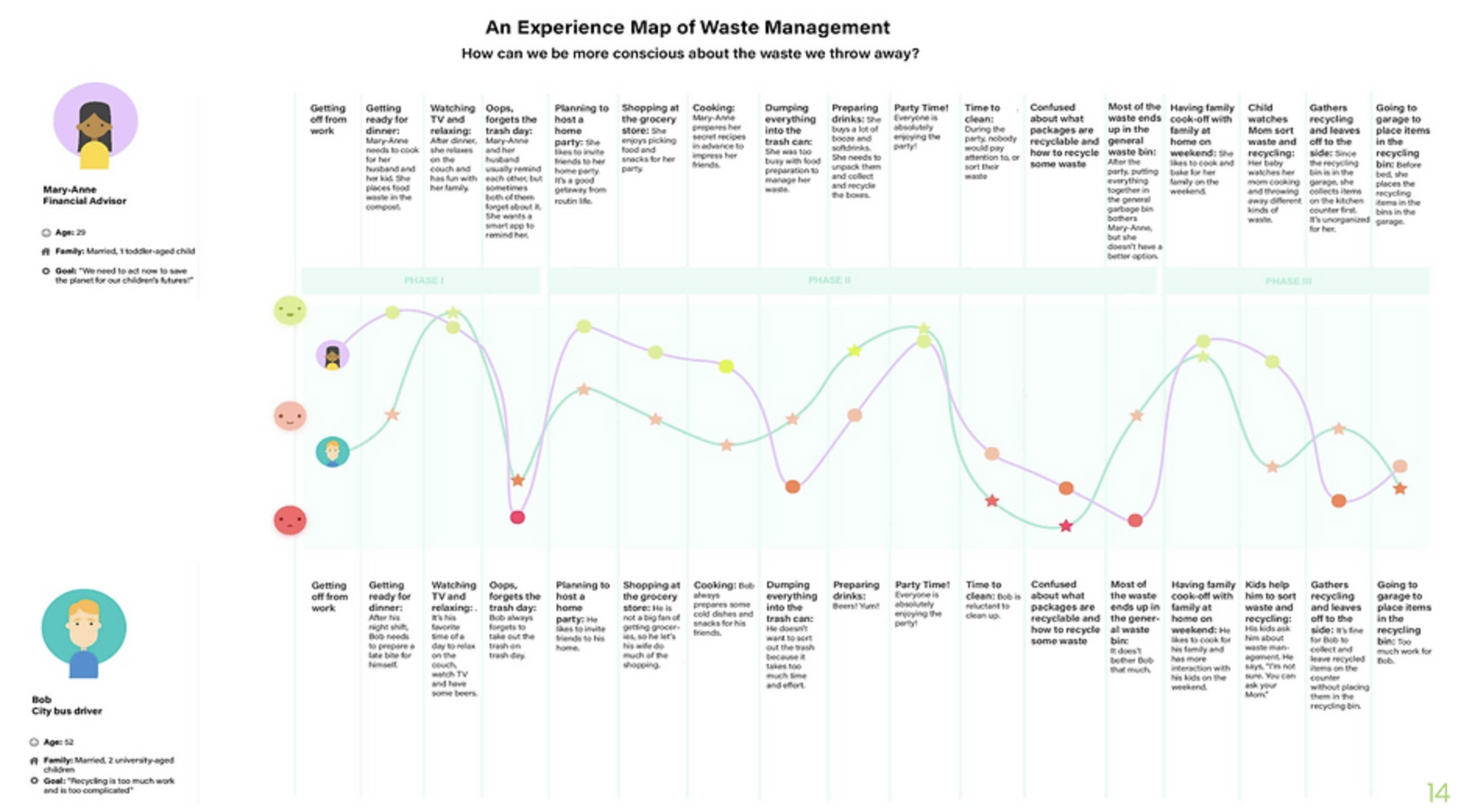
How can citizens be more conscious about the waste they throw away?
My Role
Ideation
Persona development (with team)
Surveys (with team)
Interviews
Usability Testing
Logo Design
Icons Design
Process
We started by thinking about what waste management means for us and how can we gather data about it. We started asking people around us. Developed a survey and sent it out to as many people as we can in the given time. We had 90 responses and more than half of the people matched our demographic criteria for an average middle-class family (e.g. age, family size, children, household income).
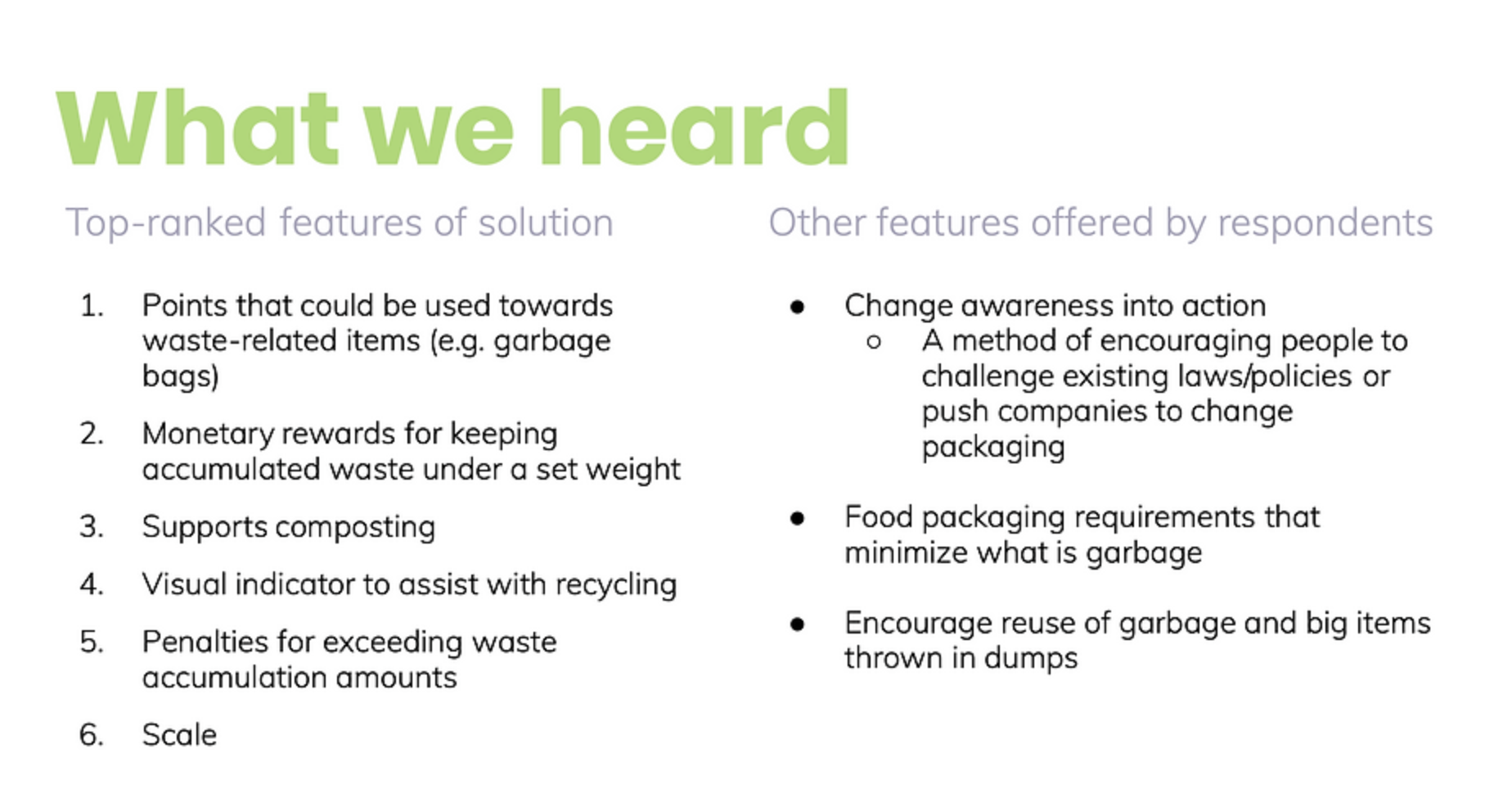
After that we organized 8 interviews (every individual in our group interviewed 2 people). We structured our questions based on our survey. Following are the results we got through our surveys and interviews.
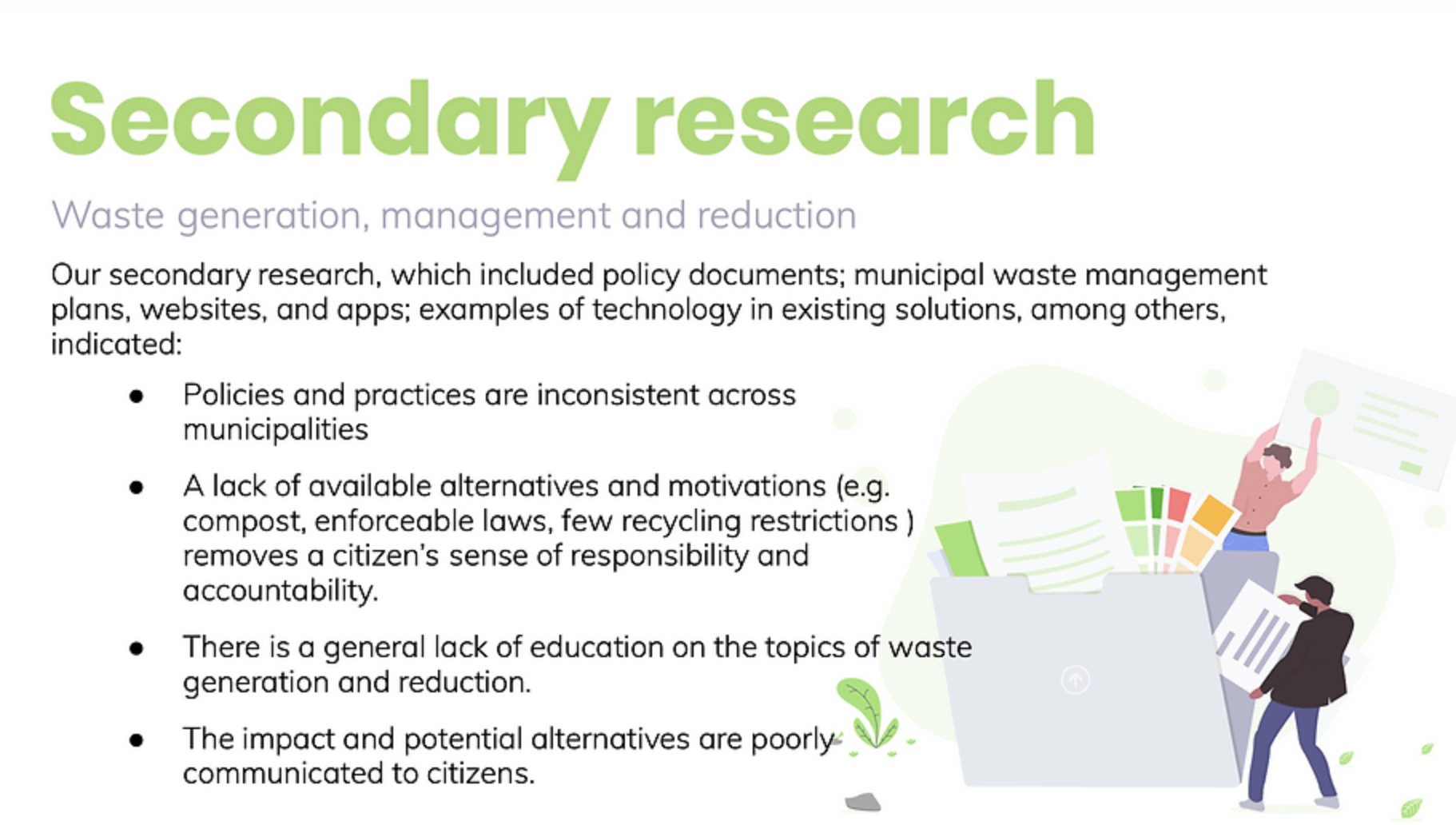
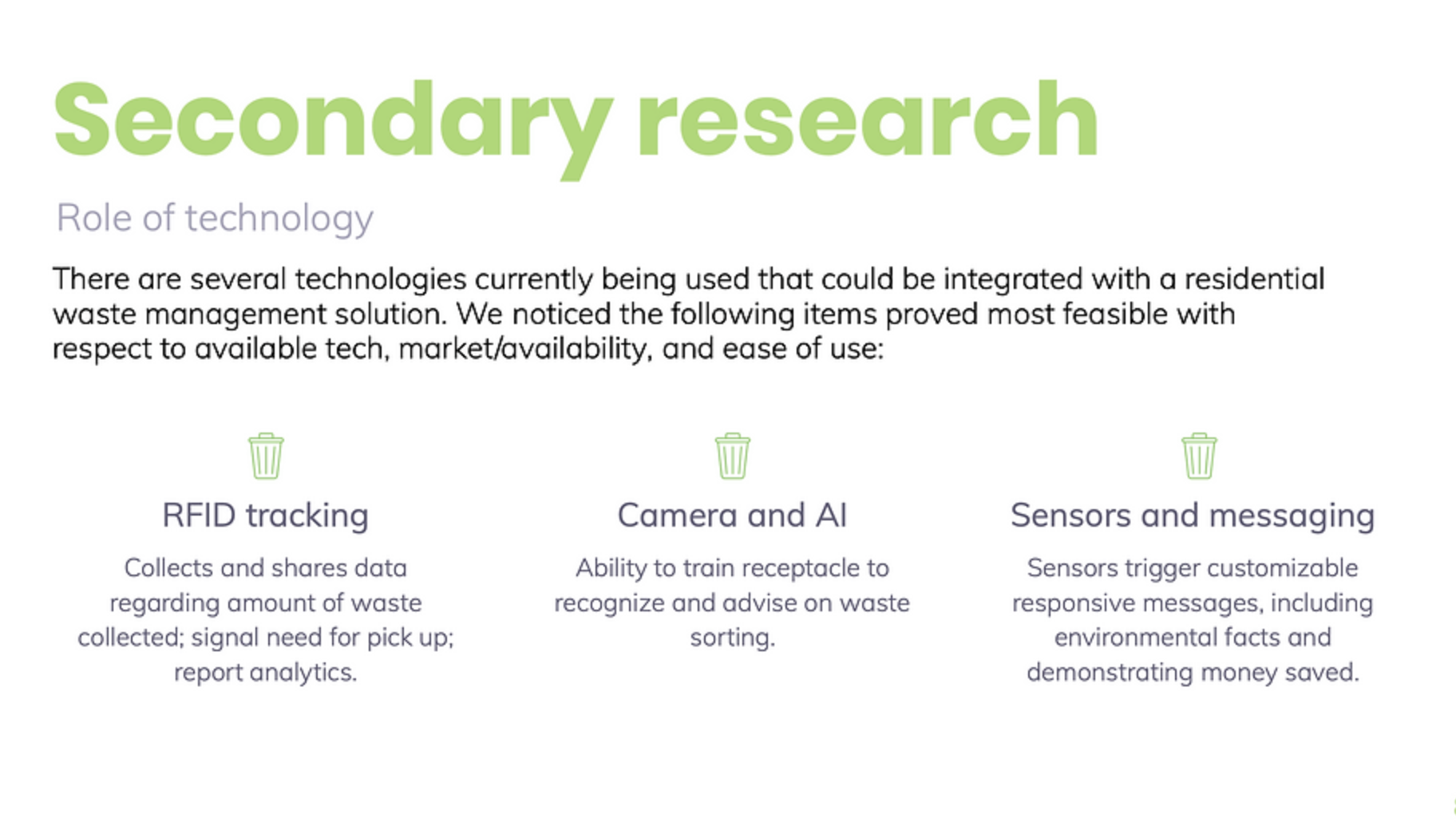
After interviews and surveys we did some secondary research
Persona Analysis
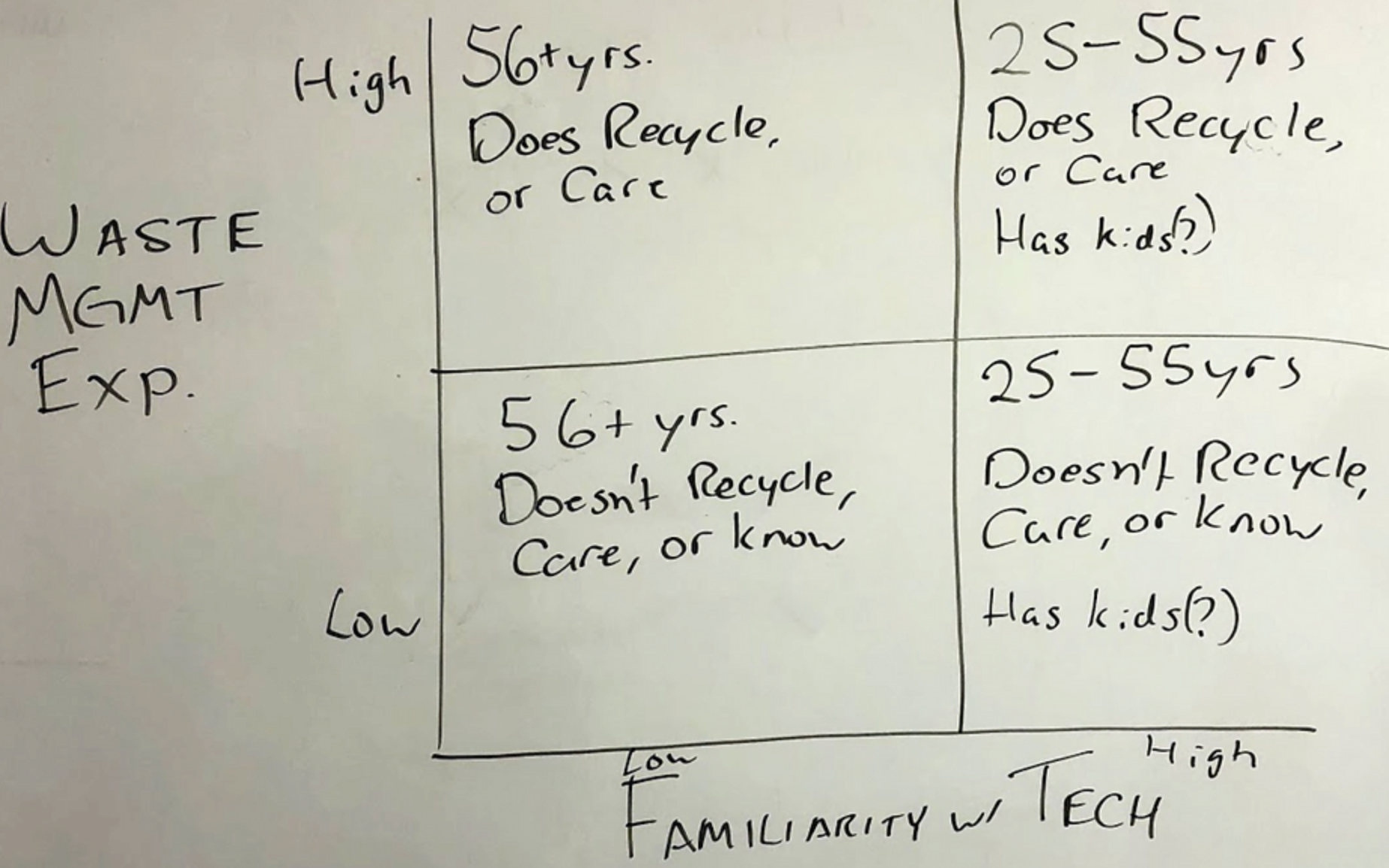
Our data analysis identified two important key dimensions: familiarity with technology and waste management experience. We plotted our findings on a 2x2 grid (see Figure 1).
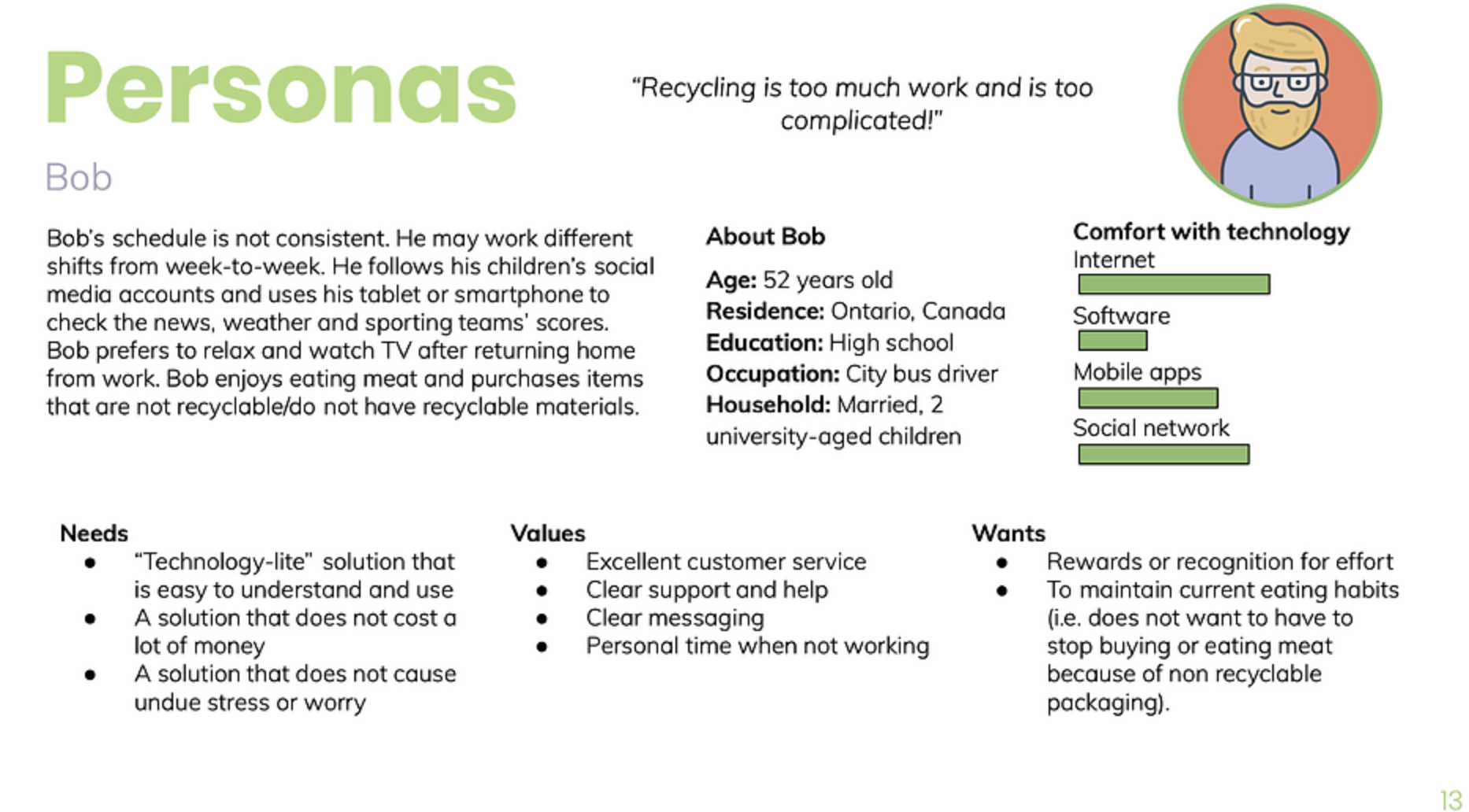
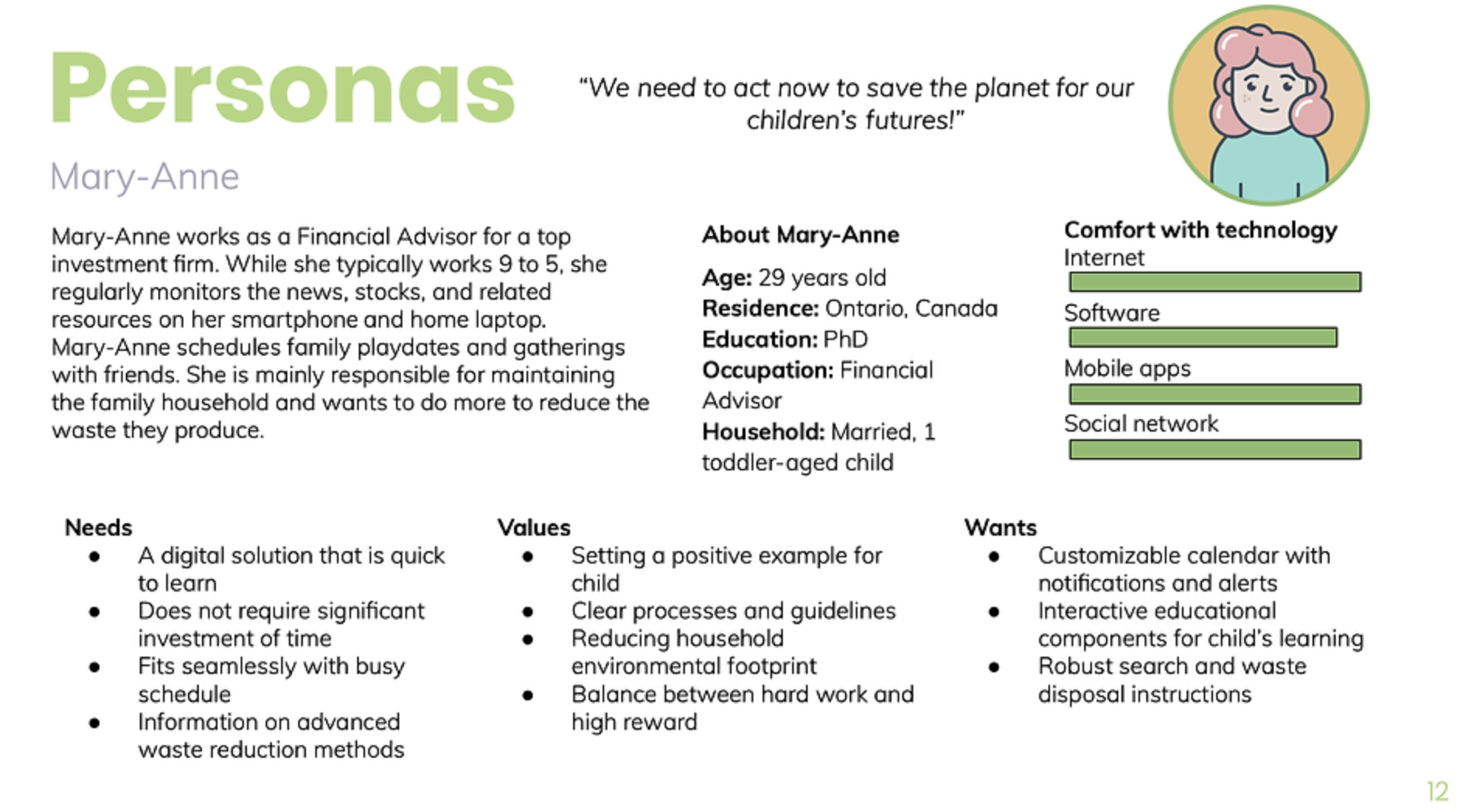
User Personas
Next, we converted our persona analysis into real people. Meet Bob and Mary Anne.
Experience Map
Solution
After all this research and developing our person we came up with a solution of 'Waste Smart' and 'Bin Buddy'. Waste Smart is an intuitive, user-friendly app that provides recycling solutions and education about waste management. Where as 'Bin Buddy' is a waste generation tracking and reporting feature that pairs with the Waste Smart app.
Logos I Designed
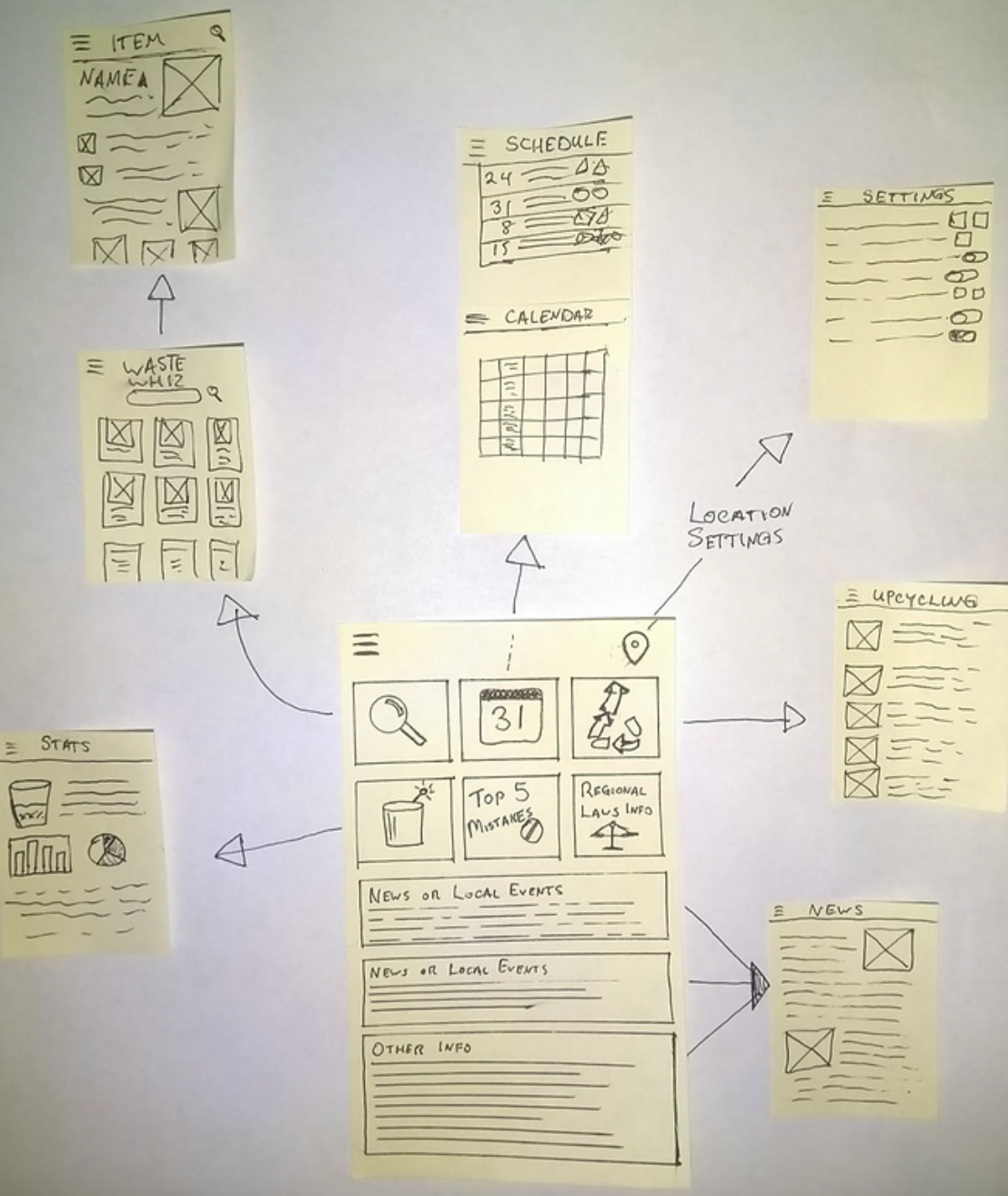
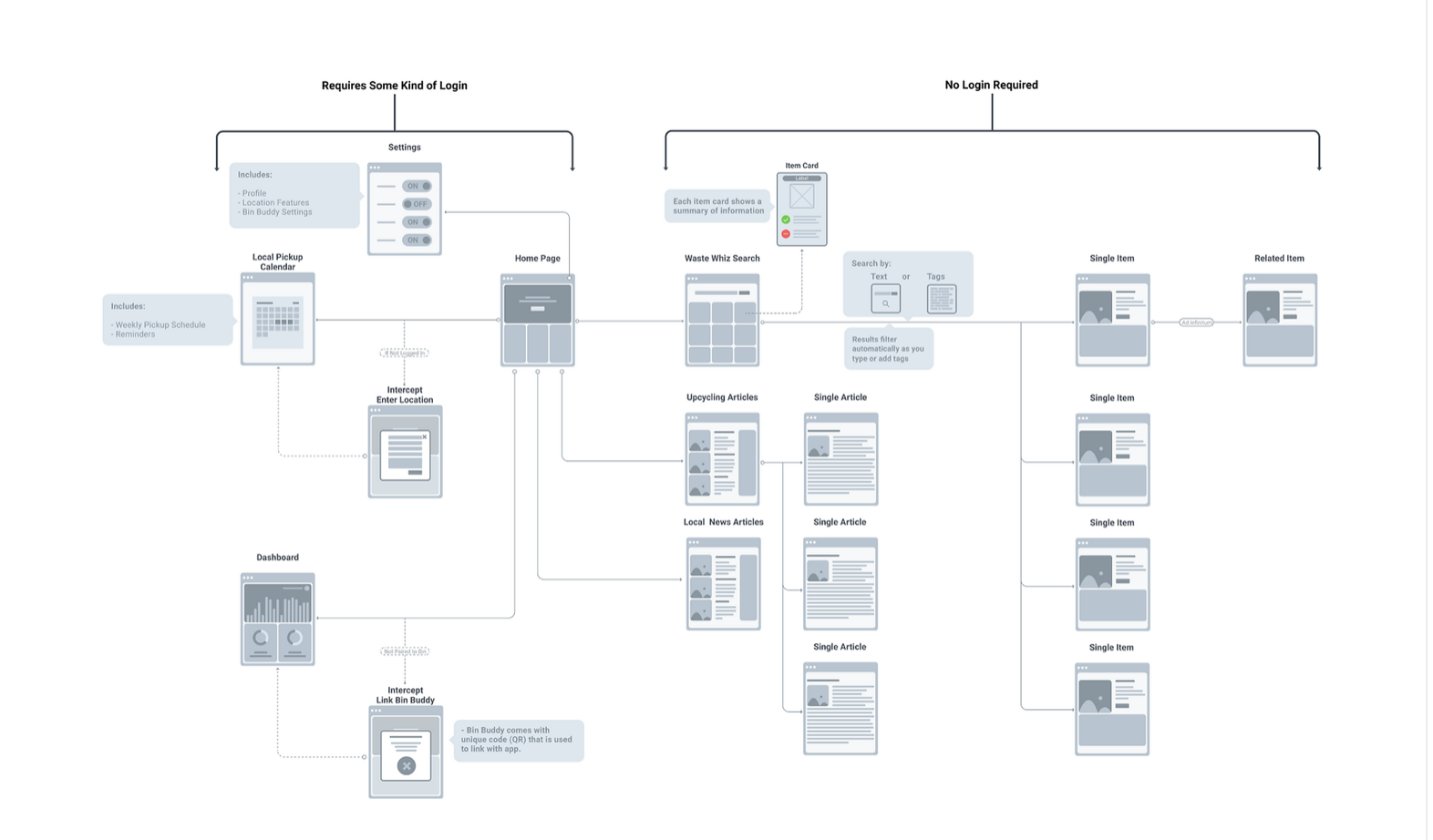
Low Fidelity user flows of the app
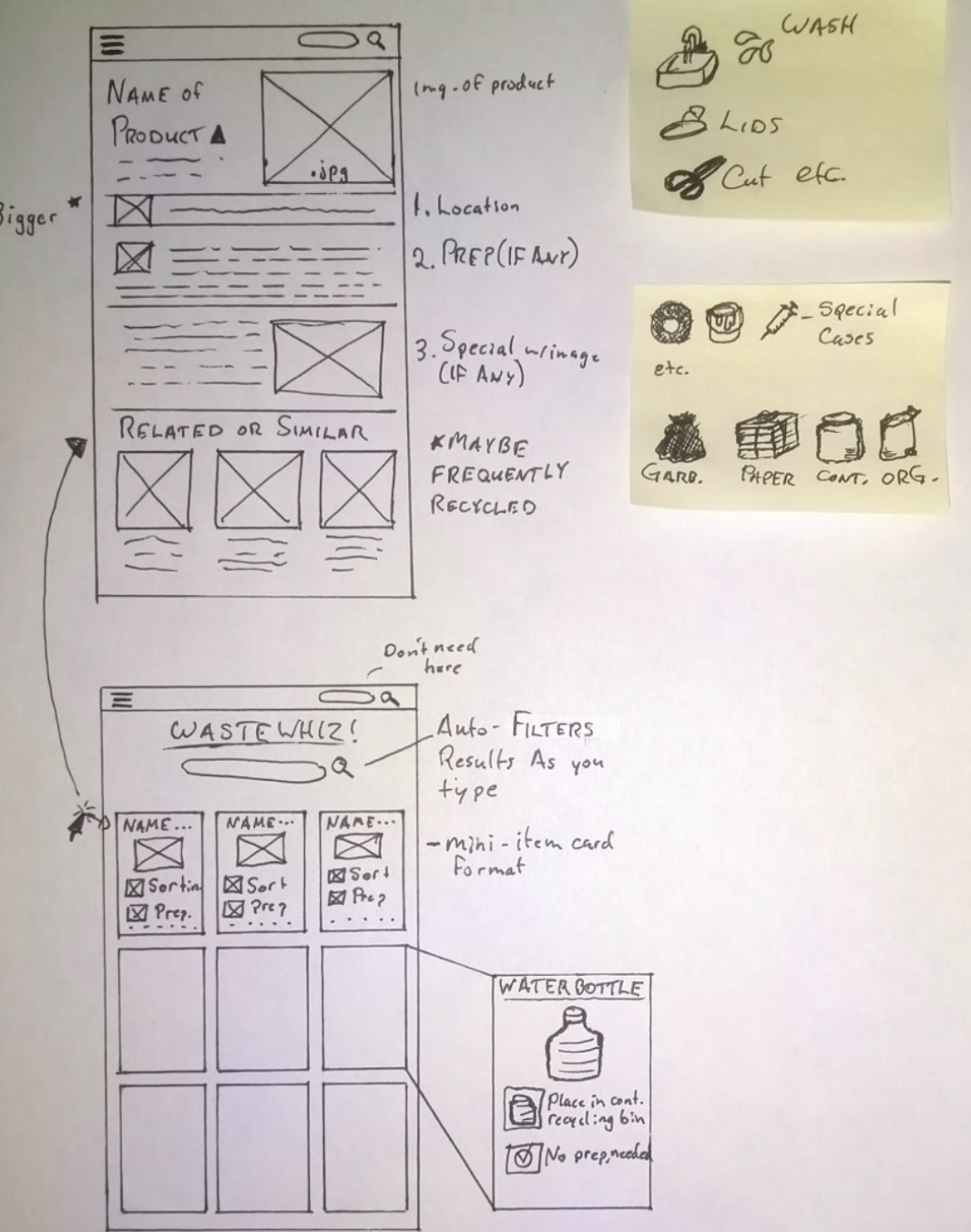
Medium Fidelity Prototype
This is our final Prototype

Usability Testing
After developing our prototype, we tested usability with six people who matched our demographic data.
Goals of user testing
Test the concept for our solution with our target audience
Identify gaps in user flow and pain points with the solution
Identify bugs and/or other issues with the solution
Usability Methods
Task-based usability testing with test introduction and approval to share feedback (eight tasks)
Moderated Speak Aloud method during the test
Moderator observation (words, facial expressions, behaviours, observations)
System usability scale (SUS) (10 questions)
A text area for feedback
After getting the feedback from our users we improved our prototype.